
Ankle injuries are among the most common outcomes of low-speed motorcycle accidents, and low-speed accidents are exactly the situations that happen most often in daily riding. A tip-over in a car park, a foot down on a slippery surface, or a slow-speed collision in traffic all put the ankle under stress that a standard trainer or work shoe simply cannot handle.
A good daily riding boot does two jobs at the same time: it protects your ankle and foot on the bike, and it is comfortable enough to wear once you arrive at your destination. In 2026, a number of brands have delivered boots that genuinely succeed at both without looking like they belong on a race circuit.
This guide covers the best options for daily commuting and everyday riding, with a focus on comfort, wearability off the bike, and protection that meets current certification standards.
What’s in this article
What Separates a Riding Boot from a Regular Boot
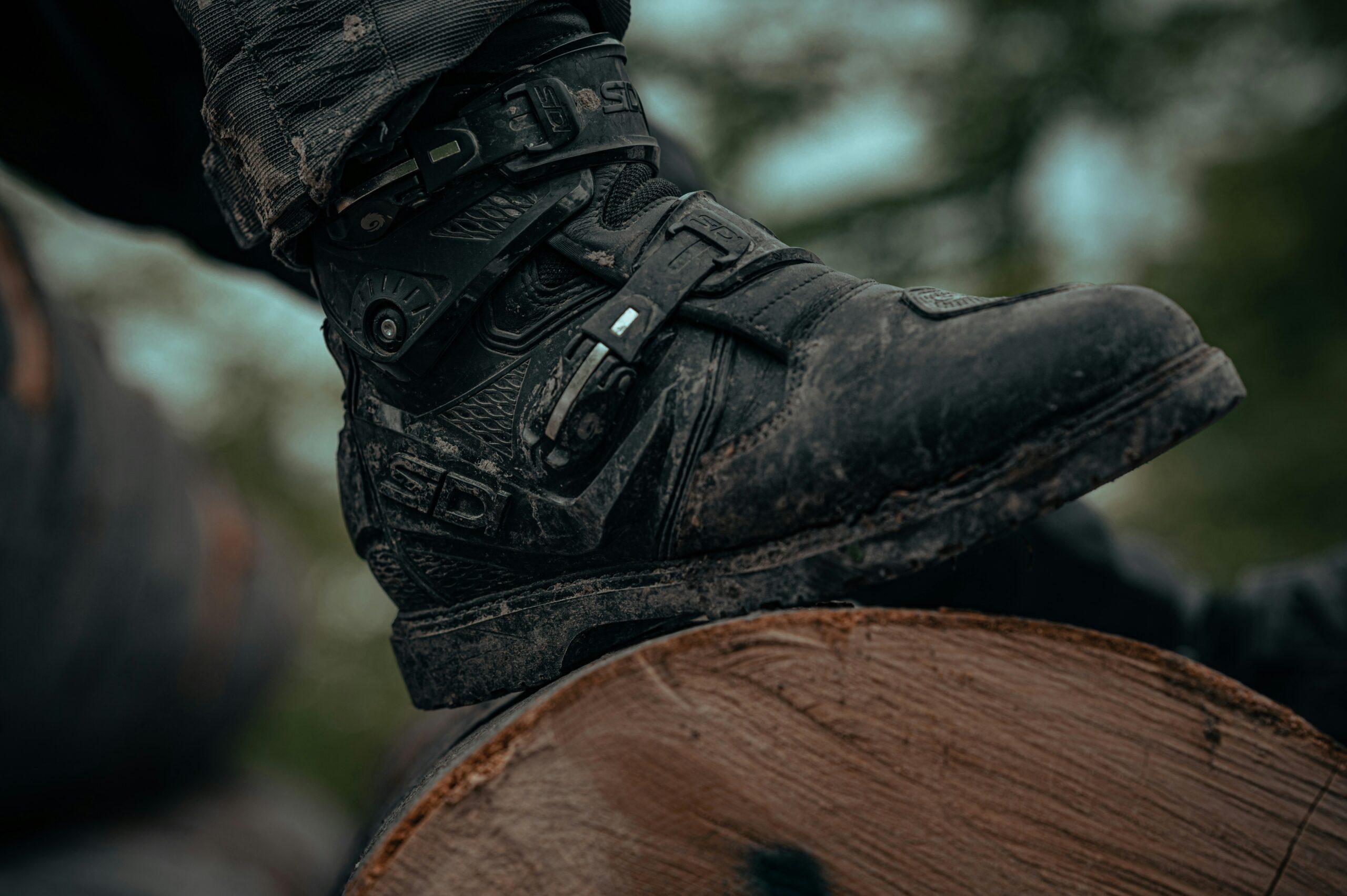
The key differences between a motorcycle boot and a regular ankle boot come down to ankle protection, sole grip, and abrasion resistance.
A certified motorcycle boot includes reinforcement around the ankle bone and heel, which protects against both impact and the lateral twisting forces that occur when a foot is caught under a falling bike. This protection is largely invisible in modern casual-style boots but makes a significant difference in a crash.
The sole on a motorcycle boot is designed to grip footpegs securely and resist the heat generated by exhaust systems and hot tarmac. Standard rubber soles can melt or deform in close proximity to hot components, which is a risk that does not exist with purpose-built riding footwear.
Abrasion-resistant materials at the toe, heel, and sides prevent the boot from wearing through in a slide. Regular leather or synthetic shoes offer minimal resistance to road surface abrasion at any speed.
CE Certification for Boots
Motorcycle boots certified to EN 13634 are tested for abrasion resistance, impact cut resistance, ankle energy absorption, and sole rigidity. The standard includes performance levels for each category, and the certification label on a boot will show a four-digit code indicating the level achieved in each area.
Level 2 in ankle protection, the third digit in the code, is the benchmark worth prioritising for daily use. It means the boot has been tested to absorb significantly more energy at the ankle than Level 1, which is meaningful in the low-speed tip-over scenarios that daily riders encounter most.
The 5 Best Motorcycle Boots for Daily Use in 2026
1. TCX Street 3 WP – Best Overall Daily Boot
Price: approximately 160 to 180 euros
GearJunkie tested the TCX Street 3 WP across extensive real-world use and described it as a boot that makes you forget you are wearing motorcycle boots. That is precisely the quality that defines a great daily riding boot.
The design is a leather high-top sneaker that works equally well at a coffee stop, in an office, or on a long ride. A T-Dry waterproof membrane protects against rain without making the boot feel stiff or heavy. CE Level 2 ankle protection is built into a construction that feels natural from the first wear, with no break-in period required.
Gadgeting Car independently reviewed the Street 3 WP and noted its excellent balance between protection, comfort, and waterproofing, calling it particularly suitable for riders who frequently get off their motorcycle and need footwear that does not attract attention off the bike.
For riders who commute daily and want one boot that handles everything, the TCX Street 3 WP is the strongest overall option in this category in 2026.
2. REV’IT G-Force 2 H2O – Best Budget Daily Boot
Price: approximately 120 to 140 euros
Gadgeting Car highlighted the REV’IT G-Force 2 H2O as one of the best price-to-performance options in the commuter boot segment, describing it as a boot that does not compromise on essential safety features despite its accessible price.
CE-approved ankle protection, a reinforced toe and heel, and a waterproof membrane make it a genuinely capable riding boot. The sporty design suits naked bikes and city riding particularly well, and the waterproof construction handles moderate rain without the bulk of a purpose-built touring boot.
For new riders and commuters who want reliable daily protection without spending at the top of the budget, the G-Force 2 H2O delivers the fundamentals at a price that makes sense.
3. Alpinestars SMX-6 V3 Vented – Best for Warm Climates
Price: approximately 180 to 200 euros
RevZilla recommended the Alpinestars SMX-6 V3 Vented for riders who want performance, protection, and comfort in one package, with a particular focus on breathability. The perforated microfiber upper keeps feet cool in warm conditions, which makes it one of the strongest options for riders in southern Europe who struggle with heat in conventional touring boots.
TPU armour covers the shin, heel, and ankle, and an internal ankle brace system provides lateral support without restricting natural movement. The dual-compound sole gives secure peg grip, and the zip and velcro closure system is quick and secure for daily use.
For riders on the Costa Blanca or elsewhere in warm climates who cover regular daily miles, the vented construction of the SMX-6 V3 makes a meaningful difference in comfort over longer rides.
4. Dainese Suburb D-WP – Best for Urban Style
Price: approximately 190 to 210 euros
The Dainese Suburb D-WP takes a casual boot approach rather than a sneaker design, and it suits riders who want something that works with everyday clothing without looking like motorcycle gear at all. The leather upper ages well and develops character over time, and the D-WP waterproof lining handles rain effectively.
CE-certified ankle protection and toe reinforcement provide the protection requirements for daily riding, while the relatively low profile and clean styling make it one of the more versatile options on this list for use off the bike. For urban commuters who park their motorcycle and spend the rest of the day on foot, the walkability and comfort of the Suburb D-WP stand out.
5. Oxford Dune Waterproof – Best Entry-Level Daily Boot
Price: approximately 85 to 100 euros
For riders who need a CE-certified daily boot at the lowest possible price, the Oxford Dune Waterproof provides the essentials without stretching the budget. Oxford is a brand with a consistent track record in entry-level gear, and the Dune Waterproof covers ankle protection, toe reinforcement, and a waterproof construction at a price that leaves room for other gear priorities.
It will not match the comfort or build quality of the TCX or Alpinestars options above, but for a first riding boot or a backup pair, it does the job that matters most: protecting your feet and ankles on the daily commute.
Riding in Warm Weather: What to Look For
Standard waterproof boots designed for northern European climates can become genuinely uncomfortable in sustained heat above 25 degrees. For riders in warm countries, a few adjustments to what you look for make a significant difference.
Ventilated or perforated uppers move air around the foot and prevent heat build-up over longer rides. The Alpinestars SMX-6 V3 Vented is the strongest example on this list, but several brands now offer ventilated versions of their popular commuter boots.
Avoid Gore-Tex or waterproof membranes in pure summer riding situations. A waterproof membrane traps heat as effectively as it blocks water. In consistently dry, hot conditions, a non-waterproof ventilated boot is significantly more comfortable and there is little practical reason to carry a membrane you will rarely need.
A moisture-wicking liner or sock pairing makes a noticeable difference in comfort on long rides in heat. It is a small investment that extends how long a boot remains comfortable on warm days.
Choosing the Right Fit
Boot fit for daily use has two components: fit on the bike and fit off the bike.
On the bike, the boot should hold the ankle firmly without pressure points, provide a secure feel on the footpeg, and allow the ankle to flex naturally for gear changes and braking. A boot that is too loose shifts in a crash. A boot that is too rigid restricts the natural ankle movement needed for smooth control inputs.
Off the bike, the boot should be comfortable to walk in for extended periods. If a boot is unwearable for more than a short walk, it will not work as a genuine daily option. Test this specifically when trying boots, or look for reviews that address walkability directly.
Break-in periods vary significantly. The TCX Street 3 WP is noted for requiring no break-in at all. Leather boots from brands like Dainese typically take 50 to 100 km to soften and conform to the foot. Plan accordingly when buying.
Final Thoughts
The daily commute is where ankle injuries happen most often, and it is also the situation where riders are most tempted to skip proper footwear. A boot that is comfortable enough to wear every day removes that temptation entirely.
For most daily riders in 2026, the TCX Street 3 WP is the benchmark in this category: genuine CE Level 2 protection in a boot that works as well off the bike as on it. Riders on a tighter budget will find the REV’IT G-Force 2 H2O provides solid protection at a more accessible price. For warm climates, the Alpinestars SMX-6 V3 Vented addresses the heat management challenge that standard touring boots cannot.
Whatever you choose, make sure it carries CE certification, covers the ankle, and fits well enough that you will put it on every single day.
Disclosure: Gear4Moto uses affiliate links. If you purchase through a link on this page, we may earn a small commission at no extra cost to you. This does not influence our recommendations.