
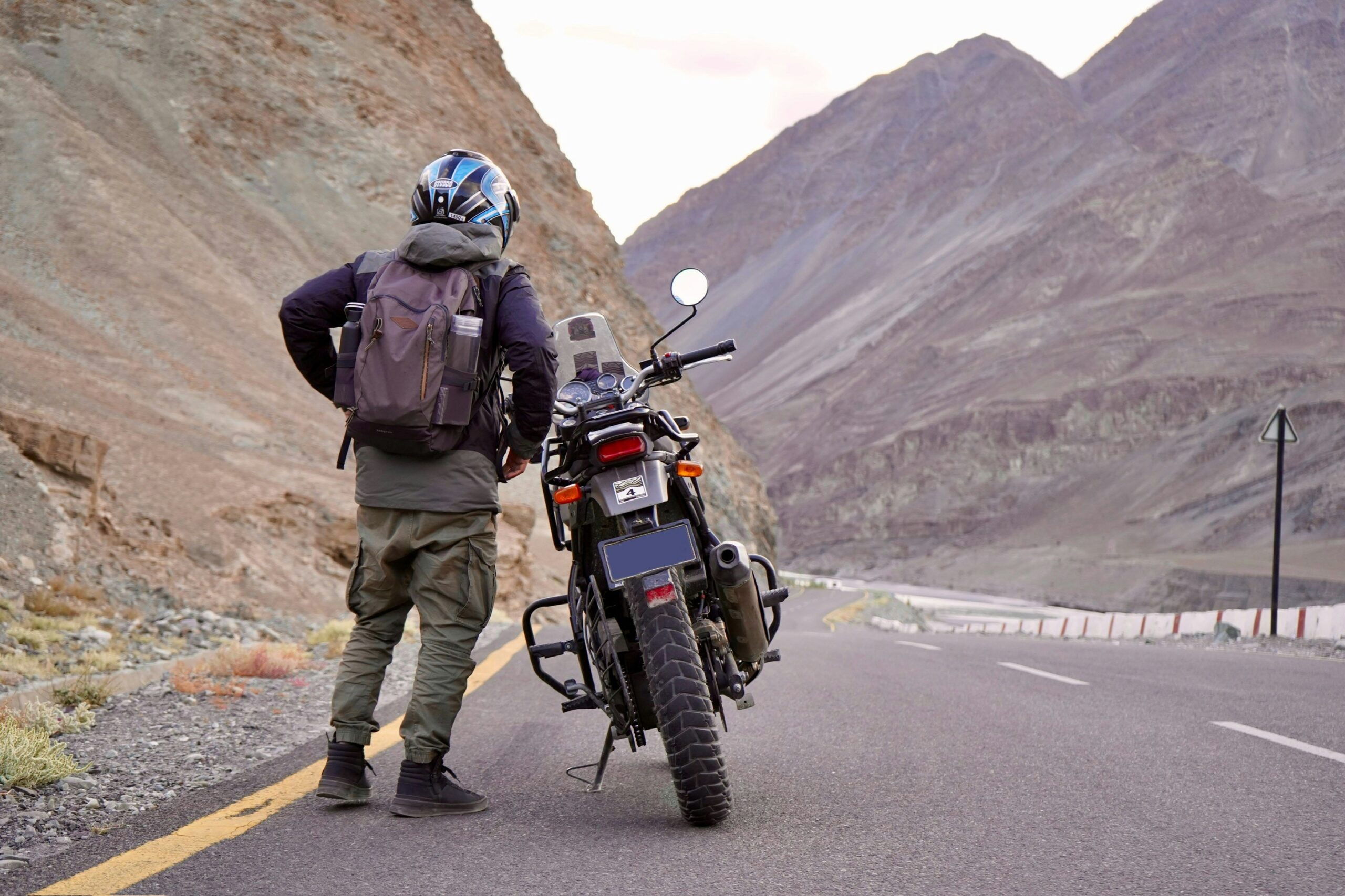
A regular backpack was not designed for motorcycling. It was designed for a person who walks upright, sits at a desk, and never exceeds 15 kilometres per hour. Put that same backpack on a motorcycle at motorway speeds and problems emerge fast: the pack catches wind and pulls backwards, loose straps whip against your jacket, the single-point back contact reduces airflow and creates heat, and the weight distribution works against your riding position rather than with it.
The best motorcycle backpacks in 2026 are engineered specifically to address every one of these problems. This guide covers the top options from the brands that know motorcycle luggage best – Kriega, Alpinestars, Dainese, OGIO, and Klim – with honest analysis of what each one does well, where it falls short, and which type of rider it suits most.
Disclosure: Gear4Moto uses affiliate links. If you purchase through a link on this page, we may earn a small commission at no extra cost to you. This does not influence our recommendations.
What’s in this article
What Makes a Motorcycle Backpack Different?
Before getting into specific products, it helps to understand what separates a genuine motorcycle backpack from a generic alternative. The differences are not cosmetic – they affect how the bag performs on the bike, how comfortable it is over a long ride, and how well it protects its contents.
Harness system. A conventional backpack hangs from two shoulder straps. A motorcycle-specific backpack adds a chest strap or sternum clip that transfers weight from the shoulders and anchors the bag against wind force. Premium designs like Kriega’s Quadloc system go further, with a rigid frame that holds the bag stable at any speed.
Back panel construction. A flat back panel presses against your spine and traps heat. Motorcycle backpacks use contoured, ventilated back panels with a slight curve that maintains airflow between the bag and your body, and positions the weight correctly for a forward-leaning riding posture.
Waterproofing. Standard backpacks are rarely genuinely waterproof. Motorcycle backpacks are either fully waterproof through roll-top or welded construction, or they include a rain cover as standard. Getting caught in unexpected rain is a reality of riding, and your laptop or phone should be protected.
Strap management. Loose straps at speed are not just irritating – they can snag on controls or become a distraction. Motorcycle backpacks include strap keepers, buckle covers, and cinch systems that lock everything in place before you move off.
Aerodynamics. The profile of a motorcycle backpack is shaped to reduce drag, with a low-profile, close-fitting design that does not catch the wind or create lift at higher speeds.
How to Choose the Right Motorcycle Backpack
Capacity is the most obvious starting point, but it should not be the only consideration. Here is what to think about before buying.
Riding type. A commuter who needs to carry a laptop and change of clothes needs different features from a weekend adventure rider who wants hydration capability and a camera. Sport riders on a crouched position have different aerodynamic requirements from upright tourers.
Capacity. As a general guide: 15-20 litres covers a day’s essentials. 20-30 litres covers a weekend trip. 30+ litres covers multi-day touring. Bigger is not always better – a bag that is too large for your daily carry will move around and feel unwieldy.
Waterproofing. If you ride year-round or in areas with unpredictable weather, a fully waterproof bag or one with an integrated rain cover is essential. If you ride only in dry summer conditions, water resistance is sufficient.
Laptop compartment. If you commute and carry a laptop, a padded sleeve with a secure closure is a priority. Check the laptop size compatibility before buying.
Hydration compatibility. Adventure and enduro riders who cover long distances without stopping benefit from hydration system integration – a bladder sleeve and tube routing that allows drinking while riding.
The 5 Best Motorcycle Backpacks in 2026
1. Kriega R25 – Best Overall Motorcycle Backpack
Price: approximately €150 to €180 Capacity: 25 litres
The Kriega R25 is consistently the benchmark against which other motorcycle backpacks are measured. Adventure Rider’s long-term review found that top-quality materials, flawless construction, and well-thought-out ergonomics made the R25 a constant companion across seven years of daily commuting, international touring, and off-road riding in Mongolia and Vietnam. That kind of longevity is not typical of motorcycle gear at any price, and it reflects Kriega’s approach to construction quality.
The defining feature is the Quadloc harness system. Four compression points secure the bag to your body via a cross-chest mechanism that distributes weight evenly and prevents the pack from shifting at speed or during aggressive cornering. Motorcycle Cruiser’s reviewer noted the harness is equipped with two locking clips that can be used with gloves on, sits narrow enough on the chest to not restrict arm movement, and opens wide enough that you do not have to wrestle it on while wearing protective gear. For daily riders who put the pack on and take it off multiple times every day, these details matter.
The construction uses Dupont Cordura throughout – a material known for exceptional abrasion resistance – with nylon ripstop panels that handle the mechanical stress of high-speed riding. The R25 is fully waterproof through a roll-top main compartment, which means there is no vulnerable zip to fail in heavy rain. A hydration bladder sleeve is included, compatible with the Kriega Hydrapak reservoir.
The 25-litre capacity is the sweet spot for most riders. It carries a full change of clothes, a laptop, and daily essentials without becoming unwieldy. The single main compartment with an external quick-access pocket is deliberately simple, which makes packing faster and finding things easier than designs with multiple subdivided compartments.
The price is higher than many alternatives, but the R25 is built to last a decade of daily use. Adventure Rider’s reviewer noted it was still going strong after seven years, calling it a good investment that rewards riders for years to come.
Best for: Commuters, tourers, adventure riders who want a long-term investment in quality.
2. Kriega R20 – Best for Enduro and Adventure Riding
Price: approximately €100 to €120 Capacity: 20 litres
The Kriega R20 shares the same Quadloc harness architecture as the R25 but in a slimmer, lighter package better suited to more active riding. Mad or Nomad’s review described it as well suited for enduro or adventure riding, with curved shoulder straps angled away from the arms to ensure freedom of movement, and a semi-rigid back pad contoured to avoid catching in the wind.
The key difference from the R25 is the waterproofing. The R20 is not waterproof – to get a waterproof Kriega backpack you need to move up to the R30, which is a considerably larger size jump for riders who want the 20-litre capacity. This is the main limitation of an otherwise excellent bag, and riders who regularly encounter rain should factor it in. For fair-weather riders or those in warm dry climates, it is not a practical concern.
Dancing the Polka’s reviewer noted the R20 fits better than any other daypack they had worn, comparing the comfort and fit to ultra-expensive trekking packs, while being designed specifically for motorcyclists in a way that standard hiking packs are not.
At around €100, the R20 is one of the best-value motorcycle backpacks available from a brand with a genuine track record. The single chest clip, compression cinches, and internal hydration sleeve cover most riders’ requirements without the added cost of the larger R25.
Best for: Enduro and adventure riders, warm-climate commuters, riders who prioritise weight and freedom of movement.
3. Alpinestars Tech Aero – Best for Sport and Crouched Riders
Price: approximately €80 to €110 Capacity: 22 litres
The Alpinestars Tech Aero is designed around the specific challenges of sport riding. Road & Track named it their Most Aerodynamic pick, noting its articulated back is perfect for crouched riders and it is roomy enough to fit a full-face helmet when off the bike. These two features address the two biggest frustrations of sport riders who carry a backpack: wind resistance at speed, and what to do with the helmet when you arrive.
The articulated back panel flexes with the rider’s forward posture rather than working against it. On a sportsbike or aggressive naked bike where the body is tilted forward, this means the pack sits flat against the back rather than protruding above it – which significantly reduces drag and buffeting at higher speeds. The aerodynamic profile of the hard shell exterior reinforces this, allowing air to flow over the bag cleanly.
The 22-litre capacity is generous for a sport-focused backpack and includes a padded laptop compartment, multiple internal organisation pockets, and a waterproof rain cover. The external mounting points allow a full-face helmet to be attached to the outside of the bag, which is a genuinely useful feature for sport riders who do not have a top box or panniers.
At around €80-110, the Tech Aero is one of the more accessible options on this list from a brand with genuine motorsport credentials. For sport riders who have previously struggled with regular backpacks buffeting and shifting at speed, the articulated back and aerodynamic profile make a noticeable difference from the first ride.
Best for: Sportsbike and naked bike riders, riders who frequently carry their helmet, aerodynamics-conscious riders.
4. Dainese D-Gambit – Best for Touring and Long Distance
Price: approximately €130 to €160 Capacity: 35 litres
The Dainese D-Gambit takes a different approach from the compact sport-focused designs above. At 35 litres, it is built for riders who cover serious distances and need to carry more than a day’s worth of gear. Helmets Insider listed it as their recommended large option for riders who need serious carrying capacity for touring.
The construction uses Dainese’s typical attention to detail, with a padded back panel that provides both comfort on long rides and impact protection if the bag is ever dropped. A dedicated laptop compartment, multiple internal organisers, and a rain cover are standard. The large main compartment opens fully for easy packing, which matters when you are loading and unloading at the end of a long day.
The harness system is designed for stability under load. At 35 litres fully packed the D-Gambit can become heavy, and the shoulder straps and chest buckle are reinforced accordingly. The hip belt, which Rider UK singled out for its attention to detail, fastens off-centre to prevent scratching the fuel tank when loading.
For weekend touring and multi-day trips, the D-Gambit covers most riders’ requirements in a single bag without the complexity of fitting additional luggage to the bike.
Best for: Weekend tourers, multi-day riders, riders who carry significant volume regularly.
5. Klim Nac Pak – Best Value with Hydration
Price: approximately €90 to €120 Capacity: 21 litres
Road & Track named the Klim Nac Pak their Best Value pick, noting it provides brand-name quality at an attractive price. Klim is a brand built on dual-sport and adventure riding, and the Nac Pak reflects that heritage with a focus on practical features at a price that does not strain the budget.
The standout feature is the integrated hydration compatibility. The Nac Pak is designed around a 3-litre hydration bladder with tube routing built directly into the shoulder straps, allowing riders to drink without stopping. For adventure and enduro riders who cover long off-road sections in warm conditions, this is a meaningful practical advantage over bags that require a separate stop to hydrate.
The 21-litre capacity covers daily essentials comfortably. Construction uses Klim’s durable materials with reinforced stress points and a chest harness that keeps the bag stable at speed. The profile is low and close-fitting, which works well on both upright adventure bikes and more aggressive riding positions.
At around €90-120, the Nac Pak delivers Klim quality at one of the lowest price points on this list. For riders who want a capable, well-made motorcycle backpack from a trusted brand without spending at the premium end, it is one of the strongest options available.
Best for: Adventure and dual-sport riders, hydration-focused riders, budget-conscious buyers who want brand quality.
What About the OGIO No Drag Mach 5?
Helmets Insider tested the OGIO No Drag Mach 5 and described it as a remarkable fusion of innovation and comfort, noting its streamlined molded exterior resists water and stands against wind shear at high speeds, with a shoulder gasket that conforms to the body and enhances aerodynamics.
The Mach 5 deserves a mention as a strong alternative if the Alpinestars Tech Aero does not suit your fit. It takes a similar hard-shell aerodynamic approach but with a different harness system that some riders find more comfortable. Both are available on Amazon and worth comparing if you are specifically looking for sport-focused aerodynamic performance.
Backpack Comparison Table
| Backpack | Capacity | Waterproof | Best for | Price |
|---|---|---|---|---|
| Kriega R25 | 25L | Yes | All-round | ~€160 |
| Kriega R20 | 20L | No | Enduro / Adventure | ~€110 |
| Alpinestars Tech Aero | 22L | Cover included | Sport riders | ~€95 |
| Dainese D-Gambit | 35L | Cover included | Touring | ~€145 |
| Klim Nac Pak | 21L | Water-resistant | Adventure / Value | ~€119 |
Riding in Warm Climates: What to Look For
For riders based in Spain or anywhere in southern Europe where summer temperatures regularly exceed 30 degrees, the back panel ventilation of a motorcycle backpack becomes as important as the capacity. A bag that presses flat against your back traps heat and sweat on long rides, which becomes genuinely uncomfortable in sustained heat.
The Kriega R25 and R20 both use ventilated back panels with a slight standoff from the body that allows air to circulate. The Alpinestars Tech Aero’s articulated panel similarly maintains airflow in the forward riding position. These designs make a noticeable difference in comfort on a hot day compared to a flat-panel alternative.
For hydration in the heat, the Klim Nac Pak’s integrated bladder compatibility is particularly valuable. Not having to stop and remove a backpack to drink on a long ride in summer is a small but meaningful quality-of-life improvement that riders in warm climates will use on almost every longer ride.
Frequently Asked Questions
Do I need a motorcycle-specific backpack or can I use a regular backpack?
A regular backpack can work for very short, slow rides, but it is not designed for the forces involved in motorway riding. At speed, an unsecured backpack will catch wind and pull backwards, the straps will whip against your jacket, and the weight distribution will work against your riding posture. A motorcycle-specific backpack with a chest harness eliminates all of these problems and is significantly more comfortable over any distance.
What size motorcycle backpack do I need?
For daily commuting with work essentials: 15-20 litres. For day trips with a change of clothes and camera: 20-25 litres. For weekend touring: 25-35 litres. As a general rule, buy the smallest size that comfortably fits your typical carry – a half-empty large bag moves around more than a well-filled smaller one.
What size motorcycle backpack do I need?
For daily commuting with work essentials: 15-20 litres. For day trips with a change of clothes and camera: 20-25 litres. For weekend touring: 25-35 litres. As a general rule, buy the smallest size that comfortably fits your typical carry – a half-empty large bag moves around more than a well-filled smaller one.
Are Kriega backpacks worth the price?
Yes, for riders who use a backpack regularly. Kriega bags are built to last a decade of daily use, and the Quadloc harness system is genuinely the best in the category for stability and weight distribution. The upfront cost is higher than alternatives, but the cost per year of use is lower than most cheaper bags that need replacing after two or three seasons.
Can I fit a full-face helmet in a motorcycle backpack?
Most motorcycle backpacks do not have an internal compartment large enough for a full-face helmet. The Alpinestars Tech Aero is one of the exceptions, with external mounting points that allow a helmet to be secured to the outside of the bag. Check the specific product’s helmet storage capability before buying if this is a priority.
Are motorcycle backpacks waterproof?
It depends on the model. Kriega’s R25 and R30 are fully waterproof through roll-top construction. The R20 is water-resistant but not waterproof. Most other bags on this list include a rain cover as standard, which provides protection in moderate rain but is less convenient than a fully waterproof design. If you ride regularly in wet conditions, prioritise a bag with a roll-top or welded waterproof construction.
Final Thoughts
The best motorcycle backpack in 2026 depends on how you ride and what you carry. For most riders who want one bag that handles daily commuting and occasional touring, the Kriega R25 is the benchmark choice – it combines the best harness system available with genuine long-term durability and waterproof construction. For enduro and adventure riders who prioritise weight and freedom of movement, the Kriega R20 offers the same harness quality at a lower price. For sport riders specifically, the Alpinestars Tech Aero addresses the aerodynamic and helmet-storage challenges that make regular backpacks impractical on sportsbikes.
Whatever you choose, the step up from a regular backpack to a motorcycle-specific one with a proper chest harness is one of the most immediately noticeable comfort improvements you can make to your riding setup.
Disclosure: Gear4Moto uses affiliate links. If you purchase through a link on this page, we may earn a small commission at no extra cost to you. This does not influence our recommendations.