
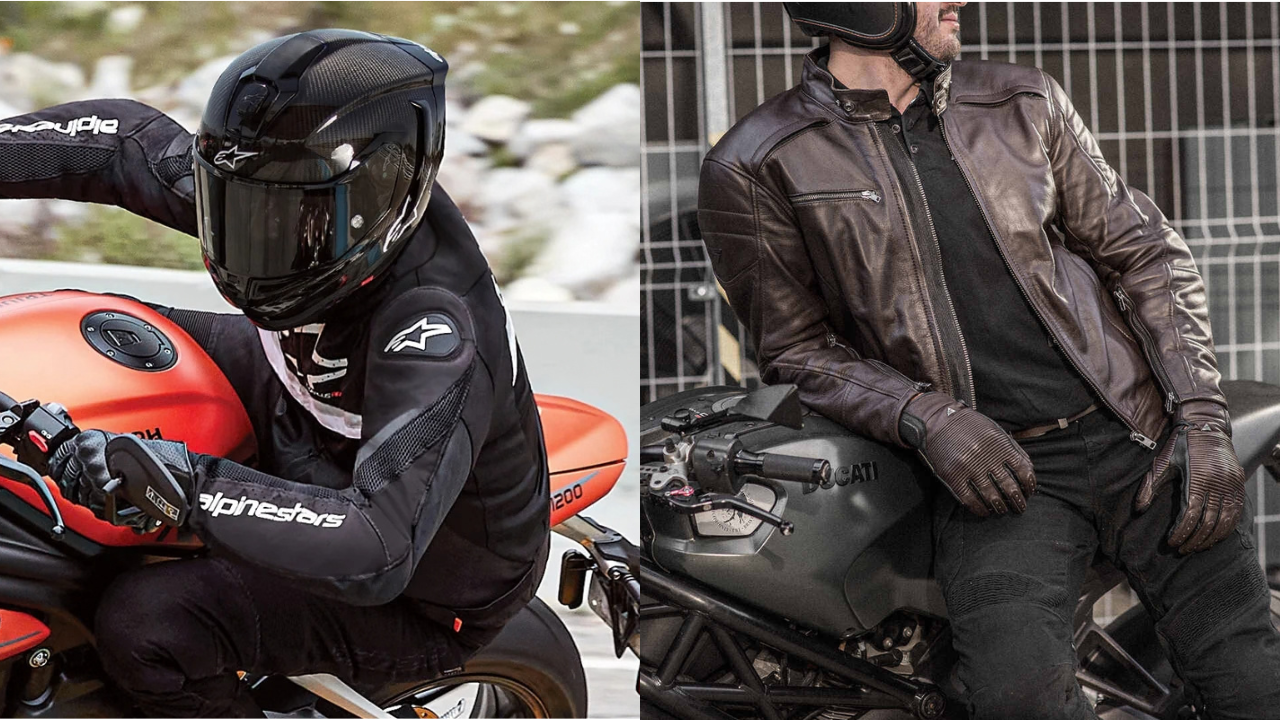
The debate between leather and textile motorcycle jackets has been going on for as long as riders have had a choice between them. Both materials have genuine strengths. Both have real limitations. And neither one is the right answer for every rider in every situation.
This guide gives you a clear, honest comparison across every factor that matters: protection, comfort, weather resistance, maintenance, price, and riding style. By the end, you will know exactly which type suits your riding and why.
Disclosure: Gear4Moto uses affiliate links. If you purchase through a link on this page, we may earn a small commission at no extra cost to you. This does not influence our recommendations.
What’s in this article
Why the Choice Matters More Than Most Riders Realise
A motorcycle jacket is not just clothing. It is the primary barrier between your skin and the road surface in a crash, and the difference in performance between a high-quality leather jacket and a well-made textile jacket is meaningful in specific circumstances.
The material affects how long the jacket resists abrasion in a slide, how comfortable it is across different temperatures and distances, how it handles rain and wind, and how much maintenance it demands over its lifetime. Getting this choice right means better protection, better comfort, and better value over the long run.
Leather Motorcycle Jackets: The Full Picture
What Leather Does Well
Abrasion resistance is leather’s strongest argument and the reason it became the default motorcycle material in the first place. A high-quality leather jacket between 1.2 and 1.4mm thick can withstand multiple seconds of sliding before wearing through. For context, most motorcycle crashes that involve a slide are measured in fractions of a second to a few seconds of tarmac contact. A quality leather jacket at the right thickness covers that window more effectively than most textile alternatives.
Durability is the second major advantage. With proper care, a leather jacket can last decades. The material ages well, hardens with use to conform to the rider’s body, and does not degrade through UV exposure the way some textile outer fabrics do. For riders who want one jacket that lasts a long time and maintains its protective properties, leather has a meaningful advantage.
Fit improves over time in a way that textile cannot replicate. Leather adjusts to the exact outline of your body, meaning the jacket fits better after a year of regular use than it did when new. This conforming property also keeps armour in position relative to the rider’s body more consistently over time.
Style is not purely cosmetic in the context of motorcycle culture. Leather jackets have a heritage and a visual identity that textile designs cannot replicate, and for riders who care about the look of their gear as much as its function, this is a legitimate consideration.
Where Leather Falls Short
Heat is leather’s most significant practical limitation. A leather jacket can start to feel like a sauna within an hour of riding in warm conditions. The material traps heat against the body and does not allow air to circulate the way mesh or ventilated textile does. For riders in warm climates or anyone who commutes through summer heat, this is not a minor inconvenience – it is a genuine safety and comfort problem that affects concentration and riding quality over longer distances.
Waterproofing is not a natural property of leather. An untreated leather jacket absorbs water, becomes heavy and uncomfortable when wet, and requires specific drying procedures to avoid damage. Waterproof leather jackets exist but they are expensive – often over a thousand euros for genuinely waterproof options. For most riders who encounter rain regularly, this is a decisive disadvantage.
Maintenance is an ongoing requirement that textile does not share. Leather needs regular conditioning to prevent drying, cracking, and loss of flexibility. This adds both time and cost to ownership compared to textile alternatives that can be machine washed.
Weight is higher than comparable textile designs, which adds fatigue on longer rides, particularly at the neck and shoulders where the jacket bears its own weight against the rider’s posture.
Textile Motorcycle Jackets: The Full Picture
What Textile Does Well
Versatility is textile’s defining advantage. A quality textile jacket handles a wider range of conditions than leather without requiring multiple specialist jackets. Most textile clothing is waterproof, breathable, and equipped with ventilation systems – a combination that leather simply cannot offer without significant additional cost.
Weather adaptability is directly linked to versatility. A textile jacket with a removable waterproof liner and zip ventilation panels is a genuinely different product in July and October. The same jacket can handle summer heat with the liner removed and vents open, and provide meaningful cold and wet weather protection with the liner fitted. This adaptability makes textile the practical choice for riders who ride year-round or in variable conditions.
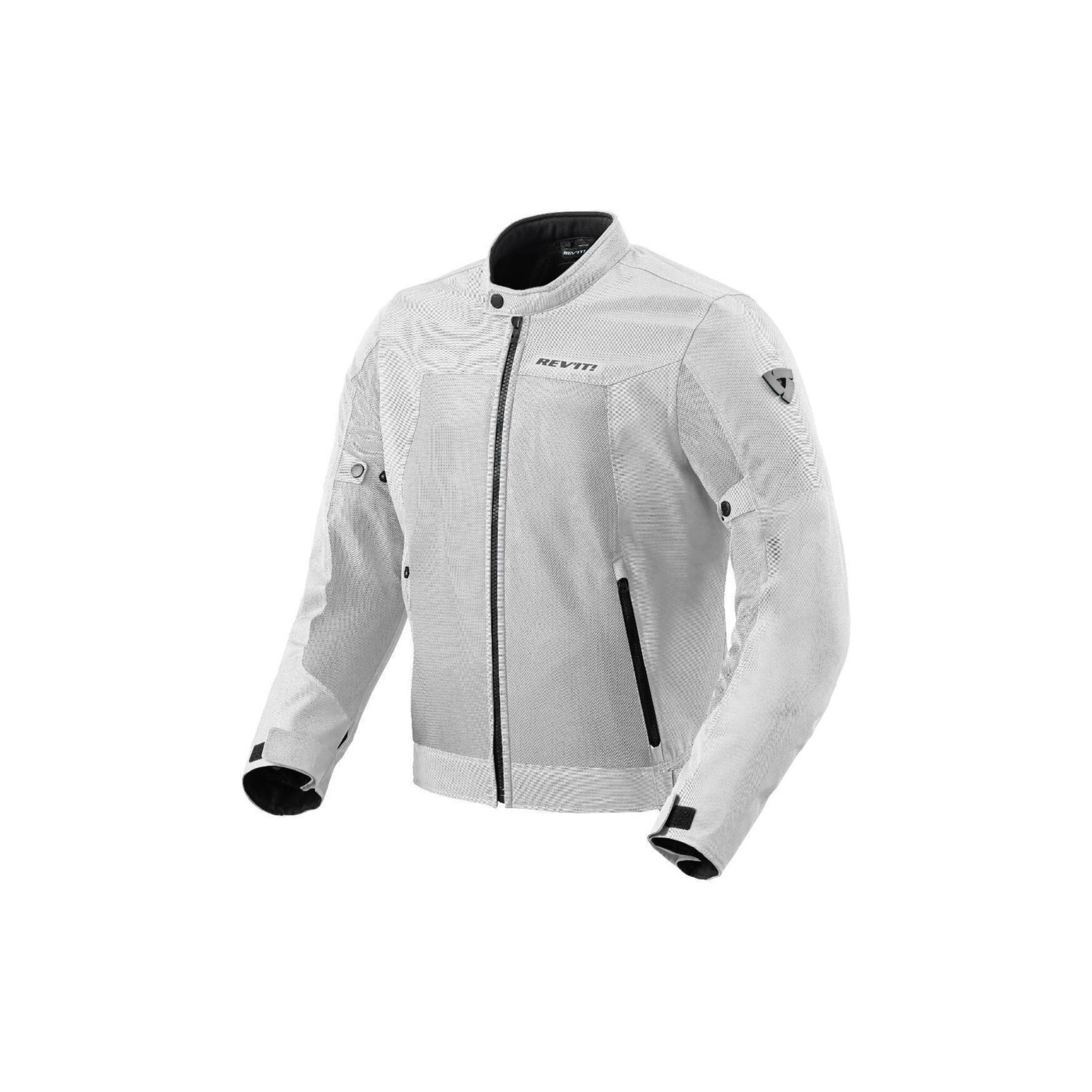
Ventilation in modern textile jackets goes well beyond what was available even a decade ago. Mesh construction moves air continuously rather than relying on zip vents, making them genuinely manageable in sustained summer heat. For riders in warm climates, this is the single most important practical advantage textile offers over leather. The REV’IT Eclipse 2 is a prime example of how far mesh textile has come.
Ease of maintenance is straightforward. Most textile jackets can be machine washed, which makes them practical for daily commuters who ride in all conditions. There is no conditioning requirement, no specialist cleaning product, and no drying protocol to follow after wet rides.
Price at the entry and mid-range level is generally lower for textile than leather. Starting prices are significantly lower for textile, which matters for new riders who need to outfit themselves completely without a large initial budget.
Where Textile Falls Short
Abrasion resistance in most textile constructions does not match a quality leather jacket in a direct slide comparison. While high-quality textiles incorporating Cordura or Kevlar offer good protection, they generally do not reach the abrasion resistance of leather at equivalent thicknesses. The gap has narrowed significantly with CE Class AA and Class AAA ratings now available in textile, but at the entry and mid-range price points the difference remains relevant.
Long-term durability of the outer fabric is generally lower than leather. UV exposure, repeated washing, and mechanical wear from repeated movement degrade textile materials over time in ways that well-maintained leather does not experience. A textile jacket typically has a useful protective life of three to five years of regular use before the outer fabric’s abrasion resistance is meaningfully reduced.
Structure does not improve with wear the way leather does. Textile jackets do not stretch and conform to the body over time, meaning the fit on day one is essentially the fit for the life of the jacket.
Head to Head: Which Wins Each Category?
| Category | Winner | Why |
|---|---|---|
| Abrasion protection | Leather | Higher resistance at equivalent price points |
| Ventilation | Textile | Mesh and zip vents outperform leather in heat |
| Waterproofing | Textile | Built-in membranes and liners vs expensive leather options |
| Versatility | Textile | Handles more conditions with one jacket |
| Long-term durability | Leather | Lasts decades with proper care |
| Maintenance | Textile | Machine washable vs regular conditioning |
| Price | Textile | Lower entry and mid-range pricing |
| Fit over time | Leather | Conforms and improves with wear |
| Style | Personal preference | Different aesthetics suit different riders |
Which Should You Choose?
The honest answer depends on how and where you ride.
Choose leather if: You ride primarily in dry conditions. You prioritise maximum abrasion protection above all other factors. You ride a sport or classic bike where the aesthetic suits the riding style. You are willing to invest in maintenance and care. You ride in moderate temperatures where heat is not a sustained problem.
Choose textile if: You ride year-round or in variable weather. You commute daily and need a jacket that handles whatever the day brings. You ride in warm climates where ventilation is a priority. You want one jacket that covers multiple seasons. You prefer lower maintenance and easier cleaning.
A note for riders in warm climates like southern Spain: For riders based in warmer parts of Europe, the heat management advantage of textile – and particularly mesh – is significant enough to override most other considerations for everyday riding. A leather jacket in sustained temperatures above 30 degrees becomes genuinely uncomfortable within an hour. For the occasional cooler or wetter day, a waterproof layer over a mesh jacket is more practical than a leather jacket in year-round warm-climate riding.
What About Hybrid Jackets?
A third option worth considering is the hybrid jacket, which combines leather panels at high-impact zones with textile or mesh panels for ventilation and flexibility.
Hybrid jackets are particularly common in sport and racing-inspired designs where leather panels cover the shoulders, elbows, and back while mesh or textile handles the chest and sides. They tend to be warmer than pure textile but cooler than full leather, and they offer a middle ground on abrasion resistance.
For riders who want leather’s protection at the key impact zones without committing to full leather’s heat and maintenance requirements, a hybrid jacket is worth considering alongside the pure options.
Recommended Jackets by Type
Best textile jacket for summer: REV’IT Eclipse 2 – CE Class A, full mesh construction, excellent ventilation at around €150. Read our full review.
Best all-season textile jacket: REV’IT Tornado 4 H2O – CE Class AA, 3-in-1 system with waterproof liner, covers summer through winter at around €350. Read our full review.
Best sport textile jacket: Alpinestars T-GP Plus R V4 Airflow – CE Class A, pre-curved sport fit, Tech-Air compatible at around €200. Read our full review.
For leather options, look for a minimum 1.2mm full-grain cowhide or goatskin, CE-certified armour at the shoulders and elbows, and a dedicated back protector pocket. Brands like Alpinestars, Dainese, and REV’IT all produce quality leather options at various price points.
Frequently Asked Questions
Is leather always safer than textile for motorcycle riding?
Not always. CE Class AA and AAA certified textile jackets offer abrasion protection that exceeds basic leather at comparable price points. At the top end of both categories, the gap narrows further. The key is certification level rather than material alone – a CE Class AA textile jacket outperforms a cheap uncertified leather jacket in every measurable way.
Can I wear a leather jacket in the rain?
Untreated leather absorbs water, becomes heavy, and requires careful drying to avoid damage. A waterproofing spray can help with light rain, but leather is not a practical choice for regular wet-weather riding. A textile jacket with a waterproof membrane is the better option for riders who regularly encounter rain.
How long does a leather motorcycle jacket last?
A quality leather jacket that is properly maintained can last decades. Regular conditioning, correct storage away from direct sunlight, and proper drying after wet exposure are the key factors. A textile jacket typically has a useful protective lifespan of three to five years of regular use.
Is textile better for beginners?
For most beginners, yes. A textile jacket covers more riding conditions with a single purchase, is easier to maintain, and is available at lower price points. For new riders who are still establishing their riding routine and preferred conditions, the versatility of textile is a practical advantage.
What is better for track days – leather or textile?
For track days, leather is the standard choice. Track regulations at many circuits require leather one-piece suits or leather two-piece suits that zip together, and the higher abrasion resistance of leather is appropriate for the higher speeds and crash risks involved in track riding. For road riding, the choice is less clear-cut.
Final Verdict
There is no universal winner in the leather vs textile debate because the right answer depends on the rider, the riding conditions, and the priorities that matter most.
Leather wins on abrasion resistance, long-term durability, and fit over time. For sport riders who prioritise maximum protection and ride in controlled dry conditions, it remains a strong choice.
Textile wins on versatility, weather adaptability, ventilation, maintenance, and value. For commuters, tourers, and riders in warm or variable climates, textile covers more ground with a single jacket.
For most riders in 2026 – particularly those in warm European climates – a quality textile jacket provides the best combination of protection, practicality, and comfort across the conditions they actually ride in. If your riding takes you into hot summers, unpredictable weather, or daily commuting, textile is the more practical choice. If you ride a sport or classic bike in dry conditions and want the heritage feel and maximum slide protection that leather offers, a quality leather jacket remains a genuinely excellent option.
Buy the material that matches your riding, not the one that matches the stereotype.
Disclosure: Gear4Moto uses affiliate links. If you purchase through a link on this page, we may earn a small commission at no extra cost to you. This does not influence our recommendations.