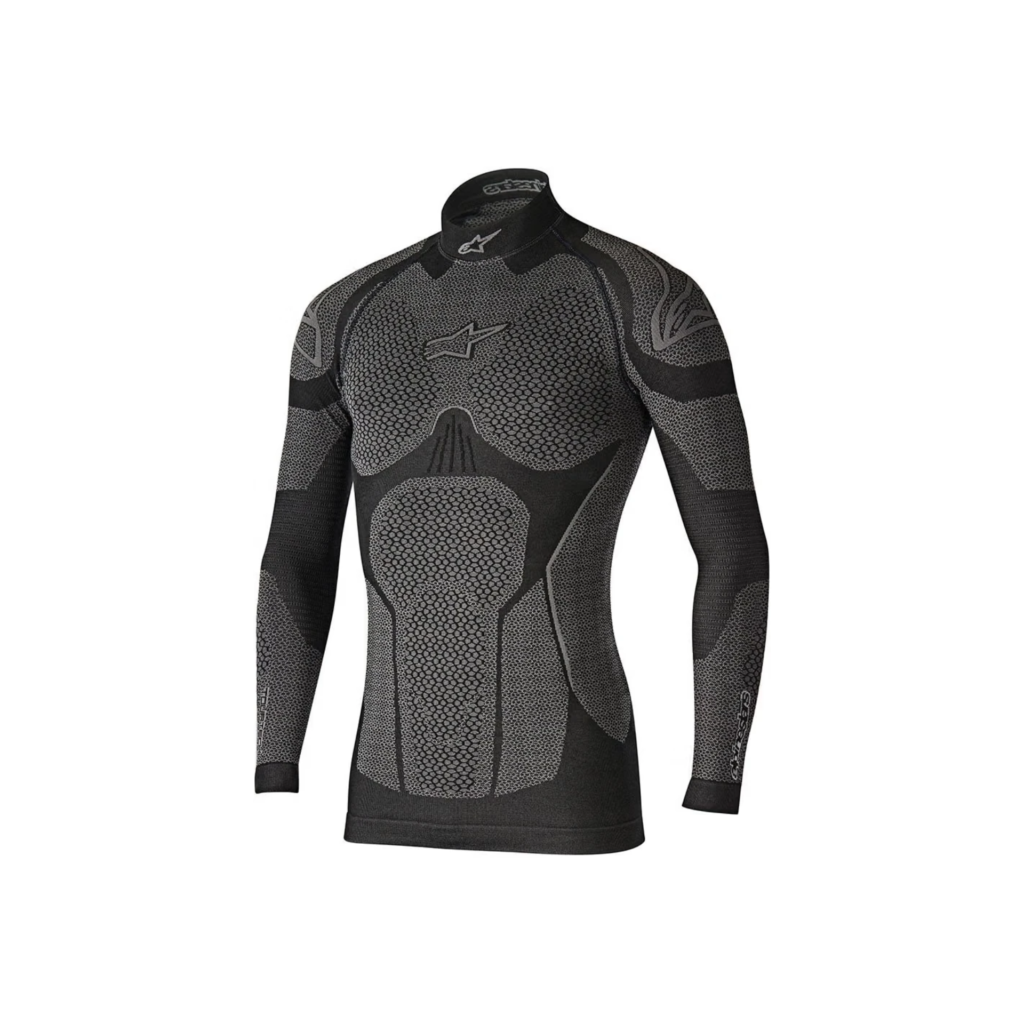
The quickest way to feel the cold on a motorcycle is a damp cotton T-shirt under your jacket. A proper base layer fixes that by moving sweat away from your skin and keeping a thin layer of warm air close to your body. The Alpinestars Ride Tech Top Long Sleeve Winter is one of the best-known motorcycle-specific base layers. In this review we look at what makes it different from a regular thermal shirt, how warm it really is, and who should buy it.
What’s in this review?
- Ride Tech Winter at a Glance
- Who Is It For?
- Why a Motorcycle Base Layer Matters
- Warmth: What to Expect
- Moisture Control
- Fit and Compression
- The Safety Angle: Synthetic That Won’t Melt
- How to Find the Right Size
- How to Layer for Winter Riding
- Pros and Cons
- FAQ
- Our Verdict
Ride Tech Winter at a Glance
| Specification | Alpinestars Ride Tech Top Long Sleeve Winter |
|---|---|
| Type | Long-sleeve motorcycle base layer for cold weather |
| Material | Polypropylene with elastane |
| Construction | Tubular, seamless |
| Insulation | Double-density fabric on the most exposed areas |
| Fit | Compression fit |
| Neck | Mock neck |
| Sizes | XS/S, M/L, XL/2XL |
| Colour | Black / grey |
| Matching item | Ride Tech Winter bottoms available separately |
| Price | Around €93 RRP, often discounted |
Who Is It For?
The Ride Tech Winter is for riders who keep going after summer: commuters, touring riders and anyone who rides in autumn, winter and early spring. It works under textile jackets and leathers, and its slim fit leaves room for an airbag vest or a mid layer on top.
It is not a heated garment and not a replacement for a proper winter jacket. Think of it as the foundation of a layering system. Our autumn motorcycle gear guide explains how all the layers work together.
Why a Motorcycle Base Layer Matters
On a motorcycle, you sweat in traffic and cool down fast once you get moving. Cotton soaks up that sweat and holds it against your skin, and wet fabric pulls heat from your body much faster than dry fabric. A synthetic base layer does the opposite: it moves moisture away from your skin, so you stay dry and warmer.
A motorcycle-specific base layer adds two more benefits over a regular sports top: a cut that fits well in a riding position, with longer sleeves and back, and fabric chosen with crashes in mind.
Warmth: What to Expect
Alpinestars uses double-density fabric on the areas most exposed to the wind, such as the chest and shoulders, with thinner fabric where you need more flexibility. That makes it warmer than the summer Ride Tech version, while staying thin enough to wear under any jacket.
It is important to set your expectations, though. Owner reviews show a clear pattern: most riders find it warm enough under a jacket at around 5 to 10°C, and some use it in sub-zero temperatures. Others still felt cold on long motorway rides at similar temperatures. That is not a flaw so much as a limit of what a thin base layer can do. It keeps you dry and adds warmth, but on its own it doesn’t create heat. For long, cold motorway rides, add a mid layer or a heated vest on top.
Moisture Control
This is where the Ride Tech Winter shines. Polypropylene absorbs very little water, so sweat moves through the fabric instead of staying in it. Reviewers consistently praise how well it wicks sweat, for example when you warm up in traffic and then ride on at higher speed. Staying dry is the key to staying warm.
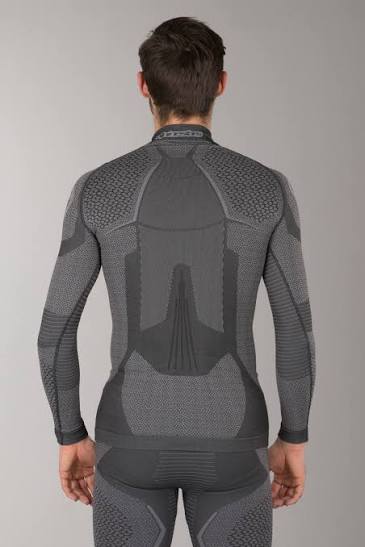
The tubular, seamless construction also helps comfort: there are no side seams to press into your skin under a tight jacket or a back protector.
Fit and Compression
The Ride Tech Winter has a compression fit. Alpinestars says it supports your muscles and reduces fatigue, and the close fit is also what makes a base layer work: the fabric needs to touch your skin to move moisture away. Owners describe the fit as snug and comfortable, with sleeves and back long enough for a riding position.
The downside of compression is that it can be tight to pull on, especially the first few times. If you are between sizes, read the sizing section below.
The Safety Angle: Synthetic That Won’t Melt
Many cheap synthetic sports tops can melt from friction heat if your jacket slides over the road in a crash, and melted fabric on skin makes injuries worse. Alpinestars states that the Ride Tech fabric will not melt under abrasion. It is not protective gear on its own, but it is one reason to choose a motorcycle base layer over a random gym shirt.
How to Find the Right Size
The Ride Tech Winter comes in three double sizes: XS/S, M/L and XL/2XL. Because the fabric stretches, each size covers a wide range. Measure your chest and check Alpinestars’ size chart on the product page.
A base layer should fit closely without restricting your breathing or shoulder movement. If you sit between two sizes and like a looser feel, or plan to wear it for long days, choose the larger size; it will still sit close to the skin.
How to Layer for Winter Riding
| Layer | What it does | Example |
|---|---|---|
| Base layer | Moves sweat away, keeps skin dry | Ride Tech Winter top and bottoms |
| Mid layer | Adds insulation | Thin fleece or a heated vest |
| Outer layer | Blocks wind and rain, holds the armour | Waterproof textile jacket and trousers |
For the outer layer, a jacket with a removable waterproof and thermal liner, like the one in our REV’IT Tornado 4 H2O review, gives you the most flexibility. Wearing an airbag vest? Thin base layers like this one are exactly what you want underneath, see our airbag vest guide. And don’t forget your hands: our Alpinestars gloves guide covers waterproof winter gloves.
Pros and Cons
| Pros | Cons |
|---|---|
| Excellent moisture wicking | Not warm enough on its own for long, cold motorway rides |
| Double-density fabric where the wind hits | Tight to pull on |
| Seamless, comfortable under tight gear | Only three double sizes |
| Long sleeves and back for a riding position | Pricey for a base layer at full price |
| Fabric designed not to melt under abrasion | Bottoms sold separately |
FAQ
How warm is the Alpinestars Ride Tech Winter top?
Most riders find it comfortable under a jacket at around 5 to 10°C. It keeps you dry and adds warmth, but it doesn’t generate heat. For colder or longer rides, add a mid layer or a heated vest.
What is the difference between Ride Tech Winter and Ride Tech Summer?
The Winter version uses double-density fabric on the most exposed areas for more warmth. The Summer version is lighter and more open, designed to cool you down in hot weather.
Should a motorcycle base layer be tight?
Yes, it should fit close to the skin, because the fabric can only move moisture away when it touches your body. It should not restrict your breathing or shoulder movement.
Can I wear a regular thermal shirt instead?
You can, as long as it is synthetic or merino and not cotton. A motorcycle base layer adds a riding-position cut, a seamless build that is comfortable under armour, and fabric designed not to melt in a slide.
Can I wear it under an airbag vest?
Yes. Thin, close-fitting base layers like the Ride Tech Winter work well under airbag systems. Always follow the airbag manufacturer’s guidance on what to wear underneath.
Our Verdict
The Alpinestars Ride Tech Winter does what a base layer should do, and does it well: it keeps you dry, adds warmth where the wind hits hardest and is comfortable under tight riding gear. Its fabric is also designed not to melt in a slide, which regular sports tops can’t promise. It isn’t a magic heater, so on long, freezing motorway rides you will still want a mid layer on top.
Our advice: if you ride through autumn and winter, a proper base layer is one of the cheapest ways to make every ride more comfortable, and the Ride Tech Winter is a reliable choice. Look out for discounts, as it is often on sale.
Score: 4.1 / 5
As an Amazon Associate I earn from qualifying purchases. Gear4Moto also earns a commission through other affiliate partners, such as Alpinestars. When you buy through our links, we may earn a small commission at no extra cost to you. We only recommend gear we consider genuinely worth buying.