Riding in winter can be beautiful: quiet roads, low sun and that crisp feeling of cold air. But it only stays fun if you stay warm. Cold riders react more slowly, lose feeling in their fingers and make mistakes. The good news is that staying warm on a motorcycle has little to do with luck and everything to do with preparation. This guide explains why you get cold so quickly on a bike, how to layer your clothing, which heated gear is worth it, and how to adapt your riding to cold roads.
What’s in this guide?
- Why You Get Cold So Fast: Wind Chill
- Dress in Layers
- Keep Your Hands Warm
- Neck, Head and Visor
- Warm, Dry Feet
- Heated Gear: Is It Worth It?
- Get Your Bike Ready for Cold Rides
- Riding on Cold Roads
- Look After Your Body
- Winter Riding Checklist
- FAQ
Why You Get Cold So Fast: Wind Chill
On a motorcycle you are constantly moving through cold air, and moving air takes heat from your body much faster than still air. That effect is called wind chill. The table below shows how cold it feels on exposed skin, calculated with the standard wind chill formula used by weather services.
| Air temperature | At 50 km/h it feels like | At 100 km/h it feels like |
|---|---|---|
| 10 °C | about 5 °C | about 4 °C |
| 5 °C | about -1 °C | about -3 °C |
| 0 °C | about -8 °C | about -11 °C |
In other words: a 5 °C morning on the motorway feels like a frosty day on any skin the wind can reach. That is why the goal of winter gear is simple: stop the wind, trap warm air close to your body and keep moisture out.
Dress in Layers
Several thin layers keep you warmer than one thick one, because each layer traps a little warm air. A good winter setup has three layers:
- Base layer. A close-fitting thermal top and leggings that move sweat away from your skin. Avoid cotton: it holds moisture and makes you cold as soon as you stop.
- Mid layer. A thin fleece or the thermal liner of your jacket. This is the insulating layer, and it should not be so thick that your jacket becomes tight.
- Outer layer. A windproof and waterproof jacket and trousers, closed properly at the collar, cuffs and waist.
The base layer is the cheapest upgrade with the biggest effect. The Alpinestars Ride Tech Winter is made for riding, with extra wind protection on the front where the cold hits hardest. Read our Alpinestars Ride Tech Winter review.
For the outer layer, a touring jacket with a fixed waterproof membrane and a removable thermal liner is ideal. The Alpinestars Andes V3 Drystar is a good example. Make sure your armour still sits in the right place with the extra layers underneath: if the jacket gets tight, go one size up.
Keep Your Hands Warm
Hands are the first thing to go cold, because they sit right in the wind with little muscle to produce heat. Cold fingers also mean slower and less precise use of the brake and clutch, so this is a safety issue as well as a comfort one.
- Winter gloves with a long cuff. The cuff should go over your jacket sleeve, so no cold air can get in at the wrist.
- Don’t buy them too tight. A glove that squeezes your fingers restricts blood flow and makes your hands colder, not warmer.
- Handguards. They keep the wind off your hands and are standard on many adventure bikes. A simple and cheap upgrade.
- Heated grips. They warm your palms from below, which lets you keep using thinner gloves with better feel. More on that below.
- Warm your gloves before you ride. Put them on a radiator for a few minutes. Starting with warm hands makes a big difference.
Neck, Head and Visor
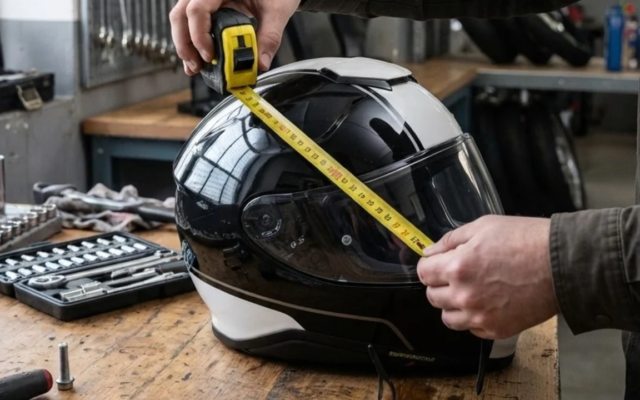
An open gap between your helmet and jacket lets cold air straight onto your neck and down your back. A neck tube or a thin balaclava closes that gap and is probably the best value winter item you can buy. Make sure your helmet’s chin curtain and breath deflector are fitted, and close the helmet vents on cold days.
Fogging is the other winter problem. Your warm breath condenses on a cold visor, and you suddenly can’t see. A Pinlock insert creates a double-glazed visor that stays clear. Many helmets come with one in the box, like the Alpinestars S-R7; for others you can buy it separately. Never ride with your visor cracked open to stop it fogging in heavy cold: you swap a fogged visor for watering eyes.
Warm, Dry Feet
Your feet don’t move much on a bike, so they cool down slowly but steadily. Waterproof boots are essential in winter, because wet feet get cold very quickly. Wear thin merino or thermal socks rather than thick cotton ones, and leave some room in the boot: just like with gloves, squeezed toes get colder. Keep your trouser legs over the boots so rain doesn’t run inside.
Heated Gear: Is It Worth It?
If you ride regularly below 5 °C, heated gear changes everything. There are two main types:
| Type | Pros | Cons |
|---|---|---|
| Connected to the bike (12V) | Unlimited run time, usually more heat | Needs wiring, you are attached to the bike by a cable |
| Battery powered | No wiring, also usable off the bike | Limited run time, batteries need charging |
Where to start? Heated grips are the best first step: they are relatively affordable, always on the bike and you forget they are there until you need them. Oxford’s HotGrips range is a popular choice that fits most bikes. Check first whether your bike’s charging system has enough spare power for 12V gear, especially on smaller bikes.
Get Your Bike Ready for Cold Rides
- Battery. Cold weakens batteries. If your bike stands still for a while between rides, use a smart battery maintainer.
- Tyre pressure. Pressure drops when it gets colder. Check your tyres cold, before you ride, and use the manufacturer’s values.
- Road salt. Salt eats into metal, especially the chain, wheels and exhaust. Rinse the bike with cold water after every salty ride, never warm water, and spray a protectant on bare metal.
- Chain. Lubricate more often in winter, because water and salt wash the lube away.
- Lights. Days are short. Make sure all lights work and are clean, so you see and are seen.
Decided that this winter is too cold after all? Read our guide on how to store your motorcycle for winter.
Riding on Cold Roads
Staying warm is only half the story. Cold roads also change how your bike behaves:
- Cold tyres have less grip. In winter your tyres may never reach their ideal temperature. Ride the first kilometres gently, and avoid hard braking and hard acceleration until you have a feel for the grip.
- Watch for black ice. Shaded corners, bridges and roads near water freeze first and thaw last. Below about 3 °C, assume there can be ice in those places.
- Wet leaves and mud. Country roads in winter are often covered in leaves, mud from tractors and gravel. Ride with extra space and look further ahead.
- Road markings and manhole covers. These are slippery when wet or cold. Cross them upright, without braking or leaning.
- Low sun. The winter sun sits low and blinds both you and other road users. Keep a dark visor or sunglasses within reach and assume drivers may not see you.
- Be visible. Grey skies and short days make you harder to see. Reflective details or a high-visibility layer help a lot.
Look After Your Body
Your body needs energy to stay warm. Eat a proper meal before a winter ride and take a warm drink and a snack with you on longer trips. Stop more often than in summer, for example every hour, and warm up properly before you get cold, not after.
Know the warning signs: uncontrollable shivering, stiff fingers, difficulty concentrating or feeling unusually tired. If you notice these, stop somewhere warm right away and don’t continue until you have fully warmed up. Pushing on while you are cold is exactly how mistakes happen.
Winter Riding Checklist
| Before you ride | Why |
|---|---|
| Thermal base layer on, no cotton | Keeps you dry and warm |
| Neck tube or balaclava | Closes the gap at your collar |
| Gloves warmed up, cuffs over sleeves | Warm hands from the start |
| Pinlock fitted, helmet vents closed | Clear vision, less cold air |
| Tyre pressure checked cold | Correct pressure means more grip |
| Check the weather for frost | Avoid black ice |
| Warm drink and a snack for longer rides | Energy to stay warm |
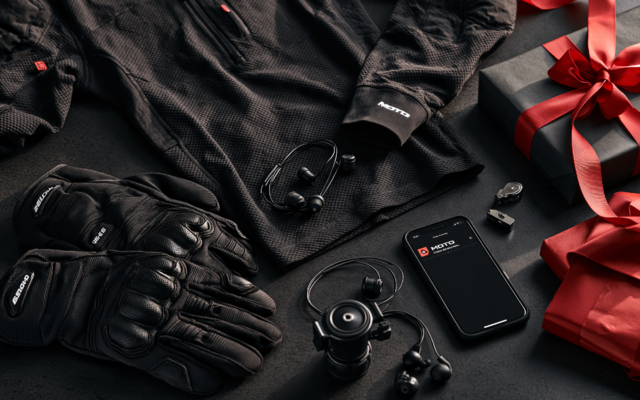
Looking for a present for a rider who keeps going all winter? See our gift guide for motorcycle riders.
FAQ
What is too cold to ride a motorcycle?
There is no fixed limit, but below about 3 °C the risk of black ice grows quickly, especially on bridges and in shaded corners. With good gear you can ride comfortably around freezing point; the road conditions are usually the real limit, not the cold itself.
How do I keep my hands warm on a motorcycle?
Wear winter gloves that are not too tight, with a long cuff over your jacket sleeve. Add handguards to keep the wind off and heated grips to warm your palms. Warming your gloves on a radiator before you leave also helps.
Are heated grips or heated gloves better?
Heated grips warm your palms and are always on the bike, so they are the easiest first step. Heated gloves also warm the back of your hands and fingertips, which makes them better in real cold, but they need a cable or batteries. Many winter riders combine heated grips with good unheated gloves.
What should I wear under my motorcycle jacket in winter?
A close-fitting thermal base layer that wicks away sweat, with a thin fleece or your jacket’s thermal liner on top. Avoid cotton, and make sure your armour still sits in the right place with the extra layers.
How do I stop my visor fogging up in winter?
Fit a Pinlock insert, which turns your visor into double glazing that stays clear. Also make sure the breath deflector is fitted and open the chin vent slightly so your breath can escape.
As an Amazon Associate I earn from qualifying purchases. Gear4Moto also earns a commission through other affiliate partners, such as Alpinestars. When you buy through our links, we may earn a small commission at no extra cost to you. We only recommend gear we consider genuinely worth buying.