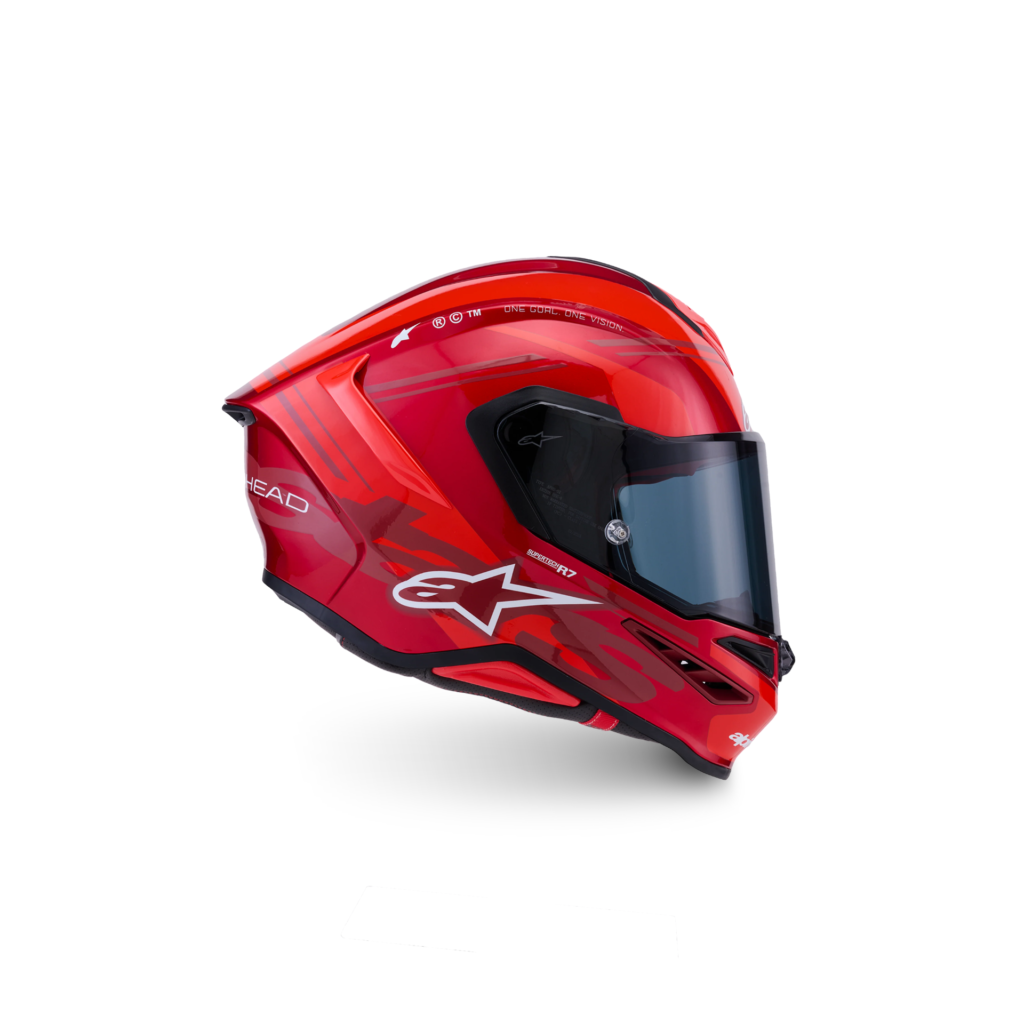
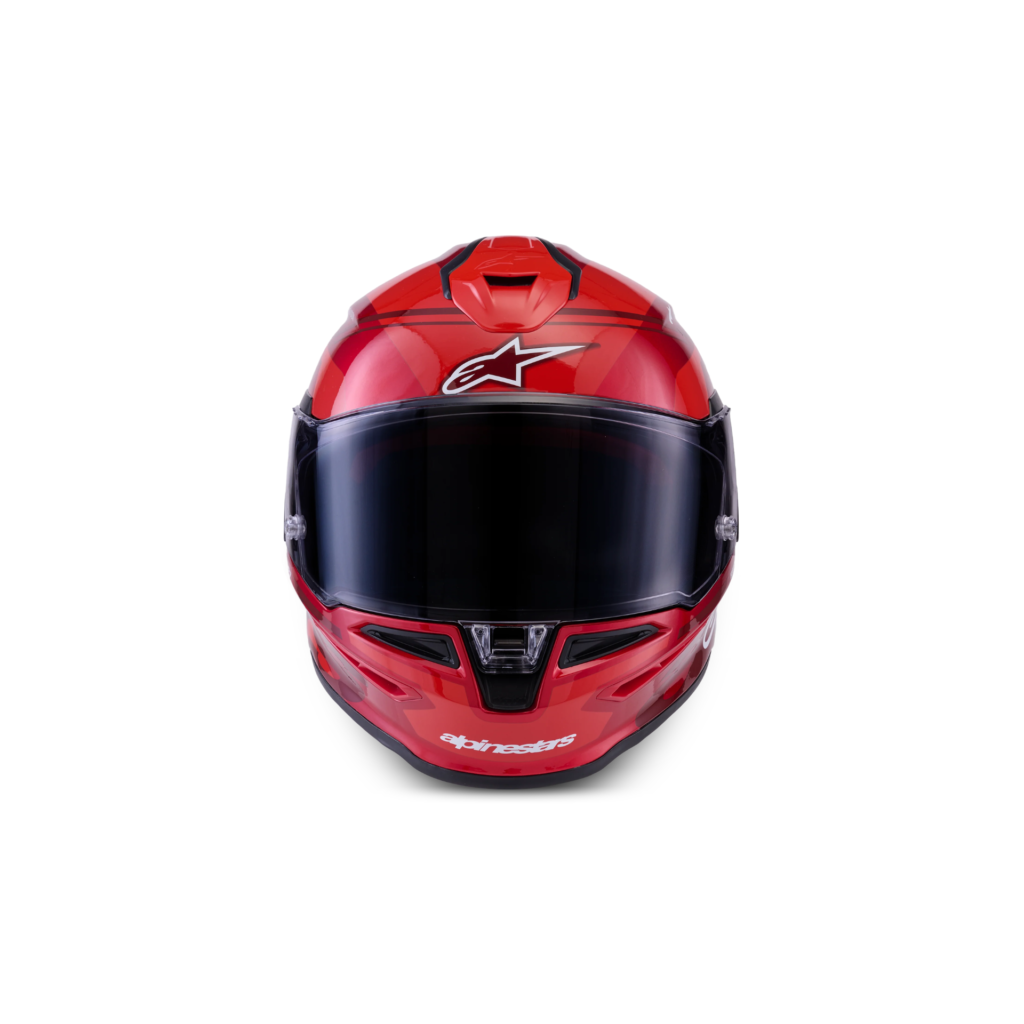
Alpinestars is best known for racing suits, boots and airbags, but its helmets are now worn at the top level of MotoGP. The Supertech R7, or S-R7, takes the technology of the race-only Supertech R10 and puts it into a more versatile helmet for road riding and track days, at a noticeably lower price. In this review we look at the S-R7 in its A-Core graphic: its construction, fit, noise, ventilation and visor, and who should buy it.
What’s in this review?
- S-R7 A-Core at a Glance
- Who Is It For?
- Protection and Construction
- Fit and the A-Head System
- Aerodynamics and Noise
- Ventilation
- Visor and Vision
- A-Connect and Intercoms
- How to Find the Right Size
- S-R7 vs Supertech R10 and Cheaper Alternatives
- Pros and Cons
- FAQ
- Our Verdict
S-R7 A-Core at a Glance
| Specification | Alpinestars S-R7 A-Core |
|---|---|
| Type | Full-face sport and track-day helmet |
| Shell | Multi-composite: fibreglass, aramid and carbon, pre-preg epoxy |
| Liner | 7 EPS sections in 6 densities, sized per shell |
| Rotational protection | Alpinestars’ own liner geometry and coatings (no MIPS) |
| Certification | ECE 22.06 (DOT on the US version) |
| Weight (size M) | Approx. 1,390 g for the ECE version |
| Visor | Optical Class 1, with lock and tool-less removal; Pinlock 120 included |
| Ventilation | 6 intakes, 4 exhausts |
| Fit system | A-Head height and angle adjustment |
| Safety extras | Emergency cheek pad release, collarbone cut-outs |
| Comms | A-Connect ready (sold separately) |
| Price | Around €600 for the A-Core graphic |
Who Is It For?
The S-R7 is aimed at sport and naked bike riders who want one premium helmet for both fast road riding and the occasional track day. It suits riders who value stability at speed and a precise fit. If you mainly commute or tour at moderate speeds, a cheaper helmet or a touring helmet with a sun visor will make more sense.
Protection and Construction
The shell is a multi-composite of fibreglass, aramid and carbon, bonded with a pre-preg epoxy process, the same type of construction used in high-end race helmets. Inside, Alpinestars uses seven EPS sections in six different densities, with liner dimensions tuned for each helmet size. That allows each zone of the helmet to absorb impacts at the right rate.
There is no MIPS. Instead, Alpinestars uses its own approach to rotational impacts: the shape and coating of the EPS liner and the surface of the comfort liner are designed to reduce rotational acceleration. The helmet is certified to ECE 22.06, which includes a rotational test. Our helmet buyer’s guide explains what that standard means.
Two smart racing details complete the package: cut-outs at the collarbone, so the helmet is less likely to strike your collarbone in a crash, and an emergency release system in the cheek pads, so medics can remove the helmet safely.
Fit and the A-Head System
The S-R7 has an intermediate oval shape, which suits most European heads. Reviewers describe the fit as snug but not overly tight, though some testers found it too snug, so trying it on first is worth it.
The standout feature is the A-Head fit system. It lets you adjust how high the helmet sits on your head and its angle. Set it more upright for road riding, or tilt it forward for a better view when you’re tucked in on a sport bike. Few helmets offer that much adjustment out of the box. The opening is also wider than on the race-fit R10, which makes it easier to put on and take off.
The liner is removable, washable and treated against bacteria. The 3D foam cheek pads have channels for glasses, but only glasses with thin arms fit comfortably.
Aerodynamics and Noise
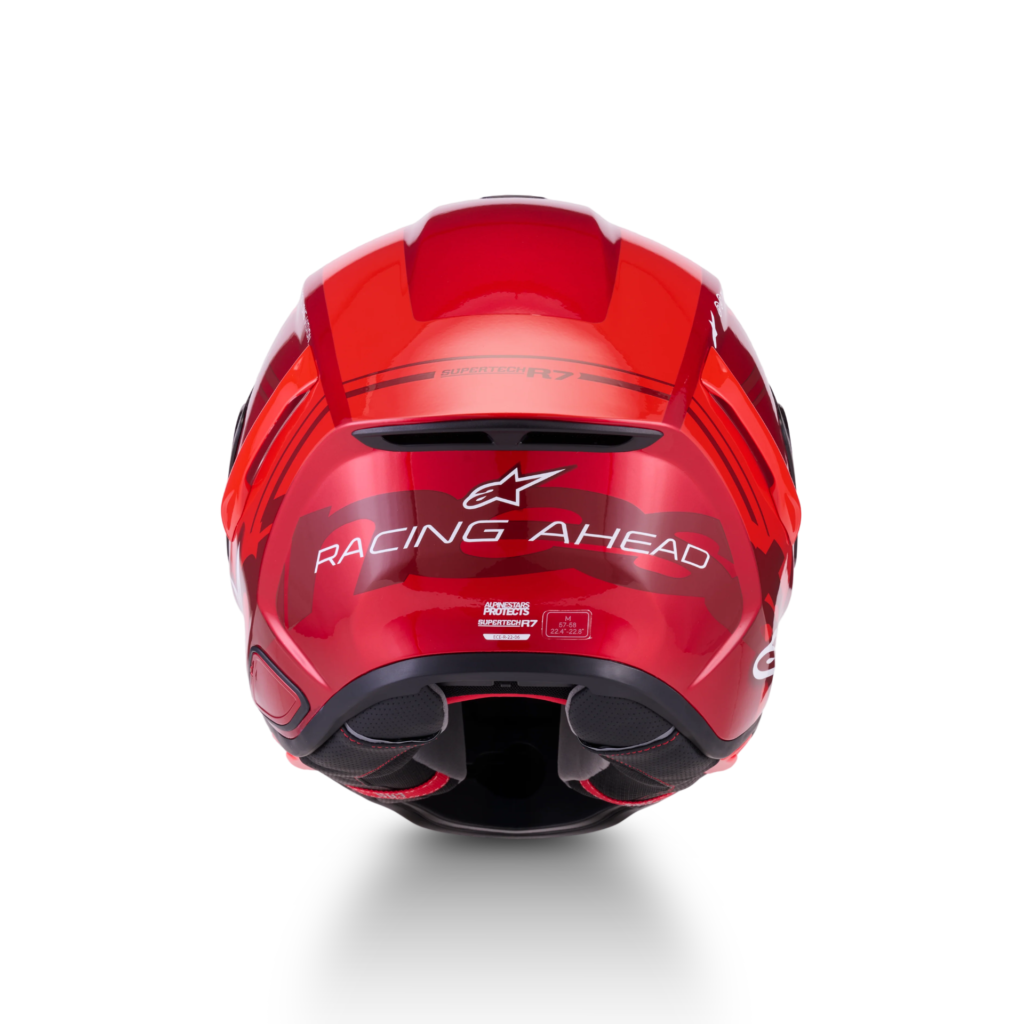
Aerodynamics is where the S-R7 shows its racing roots. The integrated rear spoiler and side winglets keep the helmet stable at high speed, and testers on track reported no notable buffeting or lift, even when looking over their shoulder.
Testers also found it quieter than many carbon helmets, partly thanks to small turbulators on the edges of the visor. That said, no sport helmet is truly quiet at motorway speed: wear earplugs on longer rides.
Ventilation
The S-R7 has six intakes and four exhausts. The top vents are large and easy to operate with gloves, and testers felt the airflow from fairly low speeds. The chin intakes direct air onto the visor to reduce fogging. The smaller chin vents are a bit fiddly, and one of them needs a rubber plug removed before it works.
Visor and Vision
The visor is an Optical Class 1 shield with an anti-scratch coating on both sides and a central lock. A Pinlock 120 MaxVision anti-fog insert comes in the box, which many competitors charge extra for. The eyeport is wide, which helps when you look into a corner while tucked in.
Removing the visor doesn’t need tools, but testers found refitting it a bit finicky, because the guide pin takes some practice to line up. There is no internal sun visor, which is normal for a sport helmet; for sunny days, a dark or iridium visor is available as an extra.
A-Connect and Intercoms
The S-R7 is ready for A-Connect, Alpinestars’ own integrated communication system with Harman Kardon speakers and noise cancelling. It fits neatly into the helmet, but it is a pricey extra. The speaker pockets are also deep enough for third-party intercoms: see our Cardo Packtalk Edge review for a popular alternative.
How to Find the Right Size
| Size | Head circumference |
|---|---|
| XS | 53–54 cm |
| S | 55–56 cm |
| M | 57–58 cm |
| L | 59–60 cm |
| XL | 61–62 cm |
| 2XL | 63–64 cm |
Measure around your head just above your eyebrows and ears. A new helmet should feel snug, with firm pressure on the cheeks but no pressure points on your forehead. Because the S-R7 has a snug fit, try it on in a shop if you can, or buy from a seller with free returns.
S-R7 vs Supertech R10 and Cheaper Alternatives
| Helmet | Best for | Price level |
|---|---|---|
| Alpinestars Supertech R10 | Racing and serious track riding | Premium |
| Alpinestars S-R7 | Fast road riding and track days | Upper mid-range |
| AGV K1 S | Sporty look on a budget | Budget |
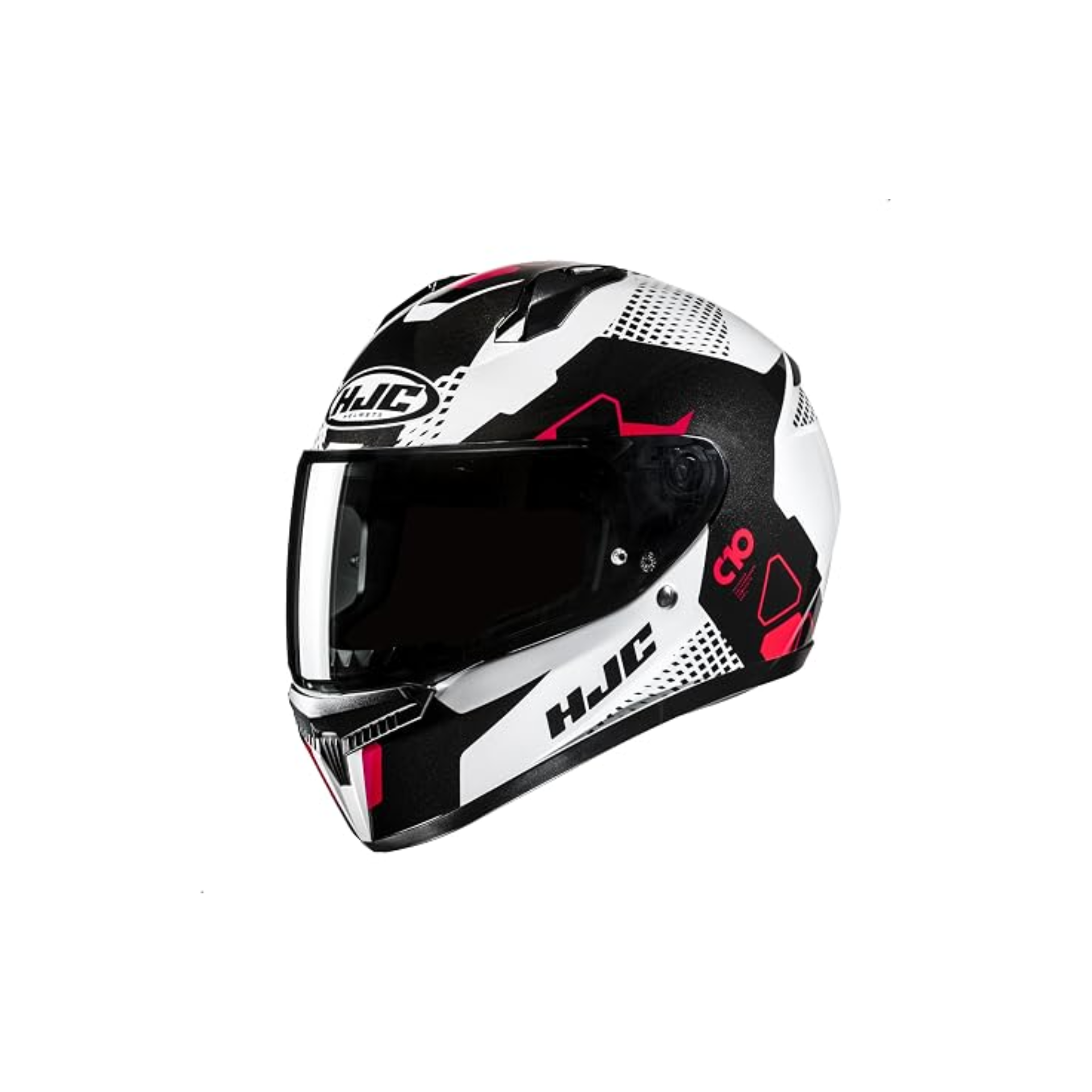
| HJC C10 | Everyday riding, best value | Budget |
The S-R7 gives you much of the R10’s race-derived design, aerodynamics and liner technology, with a wider opening, more comfort and a much lower price. On a tighter budget, our AGV K1 S review and HJC C10 review cover two ECE 22.06 helmets at a fraction of the price.
Completing your sport riding kit? Pair the S-R7 with the jacket from our Alpinestars T-GP Plus R V4 Airflow review and the gloves from our SP-8 V3 review.
Pros and Cons
| Pros | Cons |
|---|---|
| Race-derived multi-composite shell and multi-density EPS | No MIPS (own rotational system instead) |
| Very stable at speed, little buffeting | Visor refitting is finicky |
| A-Head fit system for height and angle | Snug fit, glasses need thin arms |
| Pinlock 120 included, wide eyeport | No internal sun visor |
| Collarbone cut-outs and emergency release | A-Connect intercom is a pricey extra |
FAQ
What does A-Core mean on the Alpinestars S-R7?
A-Core is the name of the graphic design. The helmet underneath is the same S-R7 as the plain-coloured versions; graphic versions usually cost a little more.
Does the Alpinestars S-R7 have MIPS?
No. Alpinestars uses its own approach, with the shape and coatings of the EPS liner and the comfort liner designed to reduce rotational acceleration. The helmet meets ECE 22.06, which includes a rotational impact test.
How much does the Alpinestars S-R7 weigh?
The ECE version weighs around 1,390 grams in size M. The DOT version sold in the US is slightly heavier.
What is the difference between the S-R7 and the Supertech R10?
The R10 is Alpinestars’ full race helmet with a tighter, race-focused fit. The S-R7 uses similar technology but has a wider opening, a more comfortable fit for the road and a much lower price.
Is the Alpinestars S-R7 good for touring?
It can be used for touring, but it is designed for sport riding. It has no internal sun visor, and a touring helmet will be quieter and more practical on long motorway days.
Our Verdict
The Alpinestars S-R7 brings genuine race technology to the road: a multi-composite shell, a seven-piece multi-density liner, excellent stability at speed and smart safety details like collarbone cut-outs. The A-Head system makes it one of the most adjustable helmets in its class, and a Pinlock comes in the box. The visor mechanism is a little fiddly and the snug fit won’t suit every head, so try it on first.
Our advice: if you ride a sport or naked bike and want one helmet for fast road riding and track days, the S-R7 is one of the best options below the price of a full race helmet.
Score: 4.3 / 5
As an Amazon Associate I earn from qualifying purchases. Gear4Moto also earns a commission through other affiliate partners, such as Alpinestars. When you buy through our links, we may earn a small commission at no extra cost to you. We only recommend gear we consider genuinely worth buying.